What If You Could Do More Marketing in Less Time?
Imagine running your business without spending hours writing social media captions, designing promotional posts, answering repetitive customer questions, or manually following up with potential customers.
For many small businesses, marketing involves juggling multiple responsibilities with limited time, staff, and budgets. Hiring a dedicated team for every marketing activity is not always practical.
This is where artificial intelligence (AI) can make a difference.
Today’s AI-powered marketing tools help businesses brainstorm content, create designs, automate repetitive workflows, manage campaigns, and understand marketing performance. Instead of replacing your entire marketing team, these tools can help your existing team work more efficiently.
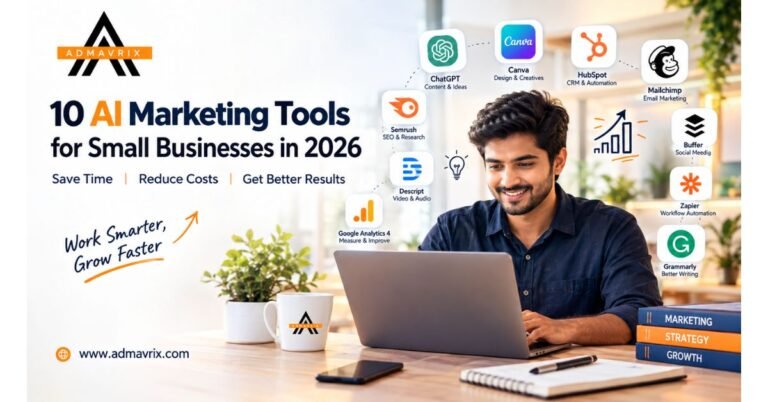
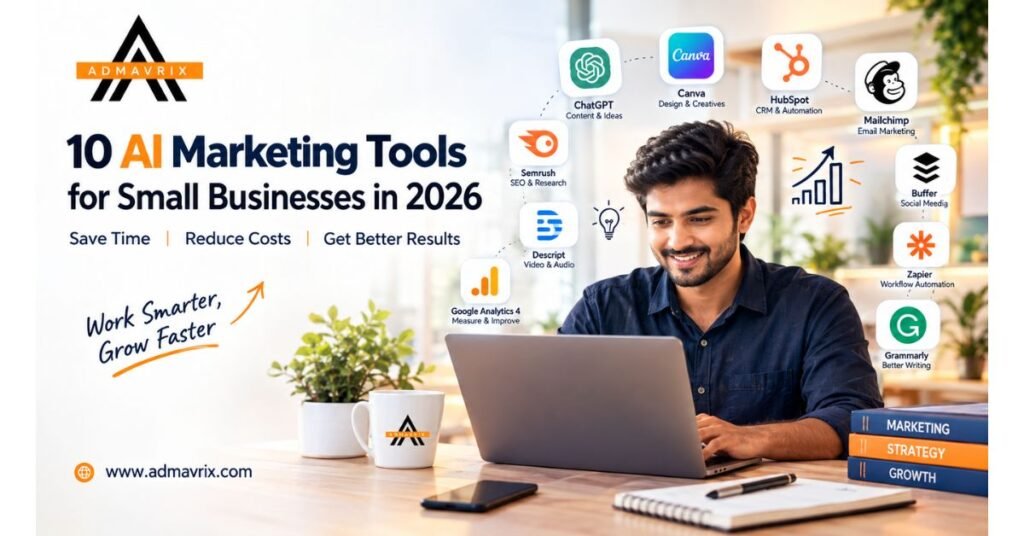
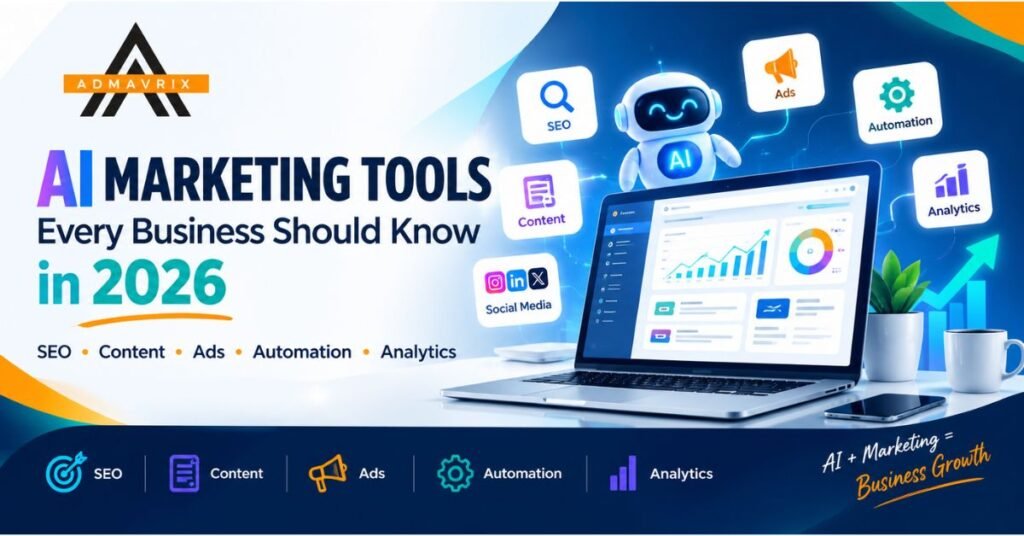
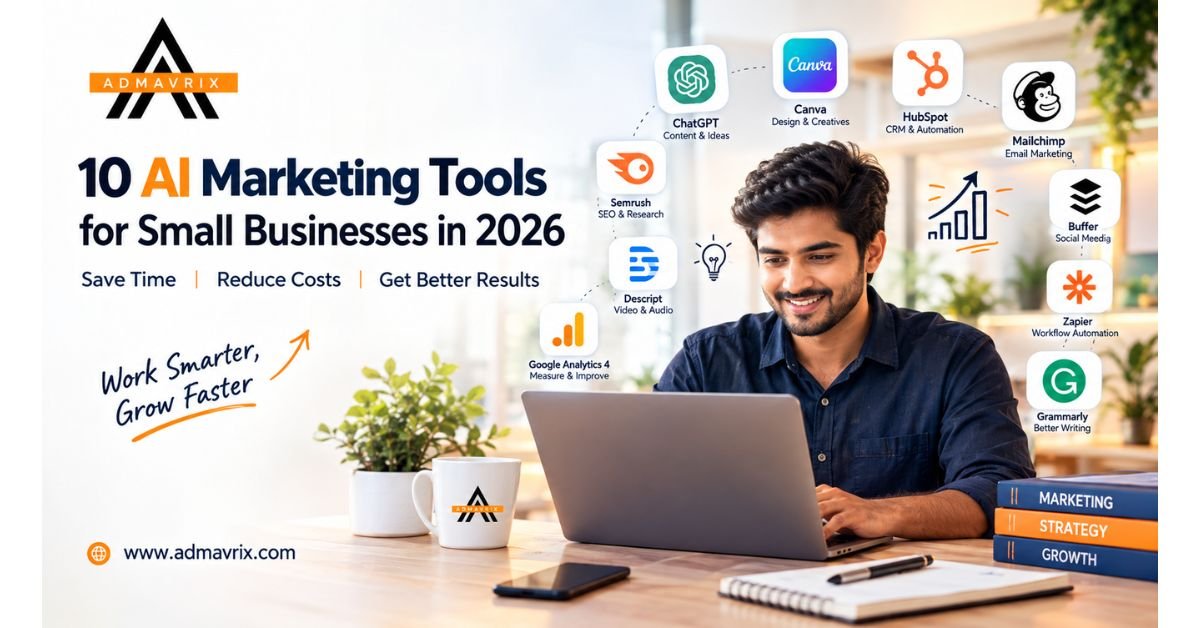
In this guide, we explore 10 AI marketing tools for small businesses in 2026 that can help you save time, control costs, and build a more effective marketing strategy.
Introduction: Why Small Businesses Need AI Marketing Tools in 2026
Digital marketing has become increasingly competitive. Businesses need to maintain an active online presence, publish useful content, respond to customer enquiries, and measure results across multiple channels.
Managing these activities manually can consume valuable time that business owners could otherwise spend serving customers and growing their companies.
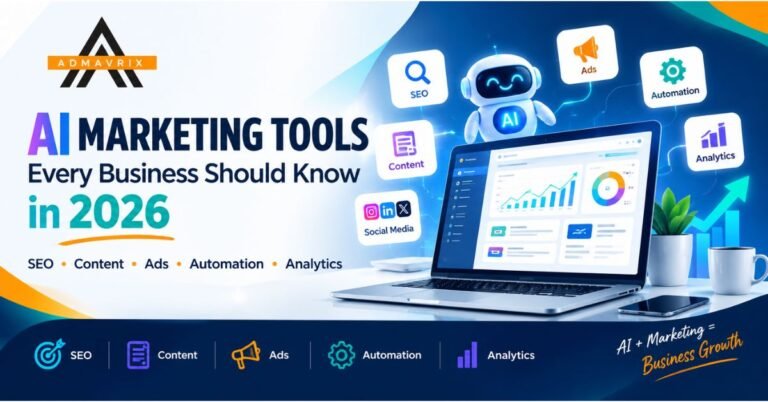
AI marketing tools simplify many of these tasks by assisting with content creation, design, automation, customer communication, search engine optimisation (SEO), and performance analysis.
For example, a local service business can use AI to draft an educational blog, create social media captions, design an advertisement, and organise customer follow-ups. A small e-commerce company can use AI to develop product descriptions, plan email campaigns, and identify opportunities to improve its website content.
However, choosing the right tools matters more than using the largest number of tools. The goal is to solve real business problems while keeping costs under control.
What Are AI Marketing Tools?
AI marketing tools are software applications that use artificial intelligence to support or automate marketing activities.
Depending on the platform, these tools can analyse data, generate written content, suggest design improvements, personalise communication, automate workflows, or identify trends in campaign performance.
Common applications include:
- Content marketing: Drafting blogs, email campaigns, and social media captions.
- Social media marketing: Planning posts, generating ideas, and scheduling content.
- SEO: Researching keywords, improving content structure, and identifying optimisation opportunities.
- Email marketing: Creating subject lines, personalising messages, and automating follow-ups.
- Marketing automation: Connecting apps and reducing repetitive manual work.
- Analytics: Organising performance data and identifying areas for improvement.
AI-generated content and recommendations still require human review. Accuracy, originality, brand consistency, and customer trust remain essential.
10 Best AI Marketing Tools for Small Businesses in 2026
The following tools serve different marketing needs. Some offer broad AI assistance, while others specialise in design, SEO, email campaigns, or workflow automation.
1. ChatGPT — Best for Marketing Content and Brainstorming
Website: https://chatgpt.com/
ChatGPT is a versatile AI assistant that small businesses can use to accelerate content creation and marketing planning.
Rather than starting every task from a blank page, marketers can use it to generate first drafts, explore campaign ideas, organise research, and adapt messaging for different audiences.
Key features:
- Blog outlines and first drafts.
- Social media captions and content calendars.
- Advertising copy variations.
- Email drafts and customer communication templates.
- Brainstorming for campaigns, offers, and landing pages.
- Summaries and analysis of supplied information.
Benefits for small businesses:
ChatGPT can reduce the time spent on repetitive writing and ideation. It is particularly useful for business owners who manage marketing themselves or work with a small team.
Practical example:
A digital marketing agency can use ChatGPT to brainstorm a month’s worth of blog topics, draft LinkedIn posts, and create multiple headline options for an advertising campaign.
Pro tip: Provide your target audience, business goals, preferred tone, and key offer in every important prompt. Review factual claims and edit the output before publishing.
2. Canva Magic Studio — Best for AI-Powered Graphic Design
Website: https://www.canva.com/
Canva Magic Studio brings AI-assisted capabilities into a familiar design environment. It helps businesses create and adapt visual content without requiring advanced graphic design skills.
Key features:
- AI-assisted writing and design.
- Image generation and editing features.
- Social media graphics and promotional creatives.
- Presentation and marketing material creation.
- Design resizing and content adaptation, depending on the available features.
Benefits for small businesses:
Businesses can create consistent marketing materials for Instagram, Facebook, LinkedIn, presentations, and promotional campaigns without starting every design from scratch.
For example, a local restaurant could create a promotional poster, a social media post, and a special-offer graphic using the same brand colours and messaging.
Pro tip: Create reusable brand templates with consistent fonts, colours, and logo placement. AI can speed up design production, but brand consistency makes your content recognisable.
3. HubSpot — Best for CRM and Marketing Automation
Website: https://www.hubspot.com/
HubSpot combines customer relationship management (CRM) with marketing, sales, and customer service capabilities. Its AI features can assist with content creation, campaign management, and customer-related workflows, depending on the product and subscription.
Key features:
- Contact and lead management.
- Marketing content assistance.
- Email marketing and campaign workflows.
- Lead tracking and customer activity records.
- Reporting and campaign analysis.
- Connections between marketing and sales activities.
Benefits for small businesses:
When enquiries come from websites, advertisements, email, and social media, keeping track of every potential customer can become difficult. A CRM helps centralise customer information and make follow-ups more organised.
Practical example:
A training institute can record enquiries, organise prospects by interest, and track which leads have received follow-up communication.
Pro tip: Start by fixing your lead-management process. AI cannot compensate for incomplete customer records or an unclear sales workflow.
4. Mailchimp — Best for AI-Assisted Email Marketing
Website: https://mailchimp.com/
Mailchimp helps businesses create, send, and measure email marketing campaigns. Its available AI-assisted features can support content creation, audience communication, and campaign optimisation.
Key features:
- Email campaign creation.
- Audience segmentation.
- Automated email journeys.
- Performance reporting.
- AI-assisted content and subject-line suggestions, where available.
- Integration with other marketing systems.
Benefits for small businesses:
Email marketing helps businesses communicate with interested customers without relying entirely on paid advertisements or social media algorithms.
For instance, an online store can send welcome emails, product updates, and relevant offers to customers who have opted in to receive communications.
Pro tip: Segment your audience instead of sending every email to everyone. Relevant messages are more useful than frequent, generic promotions.
5. Buffer — Best for Social Media Planning and Scheduling
Website: https://buffer.com/
Buffer helps businesses organise and schedule social media content. Its AI-assisted tools can support caption writing, idea generation, and adapting messages for different platforms.
Key features:
- Social media post scheduling.
- Content calendar management.
- AI-assisted caption creation.
- Platform-specific content adaptation.
- Engagement and performance analytics, depending on the plan.
Benefits for small businesses:
Instead of deciding what to publish every day, businesses can plan content in batches and maintain a consistent posting schedule.
Practical example:
A fitness studio can prepare a weekly schedule featuring exercise tips, trainer introductions, customer stories, and class announcements.
Pro tip: Use scheduling to save time, but continue checking comments and messages. Publishing content consistently is only one part of social media marketing.
6. Zapier — Best for Connecting Apps and Automating Tasks
Website: https://zapier.com/
Zapier connects different applications and automates workflows using triggers and actions. Its automation and AI capabilities can help reduce repetitive work between compatible apps.
Key features:
- Connecting marketing and business applications.
- Automated data transfer between supported services.
- Lead notification workflows.
- AI-assisted workflow building and processing, depending on availability.
- Repetitive task automation.
Benefits for small businesses:
Businesses often waste time copying information between forms, spreadsheets, email tools, and CRMs. Automation can reduce manual data entry and make routine processes more consistent.
Practical example:
When a potential customer submits a website enquiry, an automated workflow could add the lead to a spreadsheet or CRM and notify the sales team.
Pro tip: Automate one stable, repetitive process at a time. Test the workflow, check for duplicate records, and ensure customer information is handled securely.
7. Grammarly — Best for Professional Marketing Communication
Website: https://www.grammarly.com/
Grammarly uses AI-assisted writing features to help improve grammar, clarity, tone, and readability.
For small businesses, clear communication matters across website pages, advertisements, emails, proposals, and customer support messages.
Key features:
- Grammar and spelling assistance.
- Clarity and readability suggestions.
- Tone-related feedback.
- AI-assisted rewriting and drafting, depending on the plan.
- Writing support across compatible applications.
Benefits for small businesses:
A polished message can make a business appear more professional and reduce misunderstandings. Grammarly can also help teams maintain a consistent communication style.
Practical example:
A service provider can review a quotation email before sending it to a potential client, making the message clearer and easier to understand.
Pro tip: Use Grammarly as an editor, not an unquestioned authority. Check names, figures, technical terminology, and the intended meaning before accepting suggested changes.
8. Semrush — Best for SEO Research and Content Optimisation
Website: https://www.semrush.com/
Semrush offers SEO and digital marketing tools that help businesses research keywords, analyse competitors, audit websites, and identify opportunities to improve organic visibility. Certain features use AI to support content and marketing workflows.
Key features:
- Keyword research.
- Competitor and search visibility analysis.
- Website SEO audits.
- Content optimisation tools.
- Backlink research.
- AI-assisted content and marketing capabilities in applicable products.
Benefits for small businesses:
SEO can attract relevant visitors over time without requiring businesses to pay for every click. Research tools help identify topics that match customer questions and business offerings.
Practical example:
A local accounting firm could research searches related to small-business accounting services, create useful supporting pages, and improve existing content around relevant search intent.
Pro tip: Prioritise keywords based on relevance, intent, competition, and realistic business value. High search volume alone does not guarantee leads or sales.
9. Descript — Best for Video and Audio Content Creation
Website: https://www.descript.com/
Descript combines video and audio editing with AI-assisted capabilities. It can help creators and small marketing teams turn recordings into polished content more efficiently.
Key features:
- Transcript-based editing.
- Automatic transcription.
- Captions and subtitles.
- Audio cleanup features.
- Video editing and content repurposing.
- AI-assisted production features, depending on the plan.
Benefits for small businesses:
Video content can be time-consuming to edit. Descript helps simplify parts of the editing process, particularly when working with interviews, demonstrations, tutorials, and talking-head videos.
Practical example:
A business owner records a five-minute video explaining a common customer problem. The team can edit the recording, add captions, and extract shorter clips for social media.
Pro tip: Begin with a clear message and strong opening. AI editing cannot replace useful information, good delivery, or a compelling story.
10. Google Analytics 4 — Best for Measuring Marketing Performance
Website: https://analytics.google.com/
Google Analytics 4 (GA4) helps businesses understand how visitors interact with their websites and apps. Its reporting and insights can help marketers assess traffic sources, user behaviour, and conversion events.
GA4 is primarily an analytics platform rather than a dedicated generative AI writing tool. It belongs in this list because data-driven marketing is essential to using automation and AI effectively.
Key features:
- Website and app performance measurement.
- Traffic acquisition reports.
- User engagement analysis.
- Event and conversion tracking.
- Audience and channel insights.
- Reporting and insights features, subject to configuration and availability.
Benefits for small businesses:
Analytics helps businesses identify which channels bring visitors and which actions those visitors take. This supports better decisions about content, advertising, and website improvements.
Practical example:
An online retailer can compare traffic from organic search, paid advertisements, and social media, then investigate which sources contribute to purchases.
Pro tip: Configure meaningful conversion events before evaluating performance. More website visits do not necessarily mean more customers.
Quick Insights: Compare the 10 AI Marketing Tools
| Tool | Best use | Main benefit |
|---|---|---|
| ChatGPT | Content and ideas | Faster drafting |
| Canva Magic Studio | Visual design | Quicker creative production |
| HubSpot | CRM and lead management | Organised customer journeys |
| Mailchimp | Email marketing | Structured campaigns |
| Buffer | Social media | Consistent publishing |
| Zapier | Workflow automation | Less repetitive work |
| Grammarly | Writing quality | Clearer communication |
| Semrush | SEO | Better search research |
| Descript | Video and audio | Faster editing workflows |
| Google Analytics 4 | Measurement | Data-informed decisions |
Note: Features, free allowances, usage limits, and paid plans can change. Check each provider’s official website for current availability and pricing before purchasing.
Features and Benefits of AI Marketing Tools
The main advantage of AI marketing tools is not simply generating content faster. It is reducing friction across the entire marketing process.
1. Faster Content Production
AI can help create first drafts, content outlines, social media captions, and email variations. Marketers can spend more time refining messages and less time staring at a blank page.
2. Reduced Repetitive Work
Automation tools can connect applications, organise incoming enquiries, and trigger routine notifications.
3. More Consistent Marketing
Content calendars, reusable design templates, and scheduled campaigns help small teams maintain a regular publishing routine.
4. Better Customer Communication
CRM and email tools can help businesses organise customer information and deliver more relevant communication.
5. More Informed Decisions
SEO platforms and analytics tools help marketers identify opportunities, measure performance, and improve campaigns based on evidence.
6. More Efficient Resource Allocation
When repetitive tasks take less time, business owners can redirect effort towards customer service, product improvements, sales conversations, and strategy.
How to Choose the Right AI Marketing Tools for Your Business
Choosing software without identifying your business needs can lead to unnecessary subscriptions and complicated workflows.
Use these questions to guide your decision:
- What takes the most time? Identify whether the main problem is writing, design, editing, lead management, or reporting.
- What is your current budget? Start with free tiers or existing subscriptions when they meet your needs.
- Which tools do you already use? Check integrations before introducing another platform.
- What result should improve? Define a measurable outcome, such as shorter production time or faster lead follow-up.
- How will you measure success? Compare time spent, campaign performance, qualified enquiries, or cost per lead.
A business that mainly needs social media content may benefit from ChatGPT, Canva, and Buffer. A business that receives many website enquiries may gain more from a CRM and automation workflow.
The best combination depends on your marketing priorities rather than the popularity of individual tools.
Small Case Study: A Hypothetical Local Service Business
Consider a local home-services company that manages its own digital marketing with one owner and one employee.
Before adopting AI-assisted workflows, the team spends significant time creating content, preparing promotional graphics, organising enquiries, and reviewing website traffic.
The company decides to use ChatGPT for content drafts, Canva for promotional designs, a CRM for lead management, and GA4 for website measurement.
Example workflow comparison
| Activity | Before | After adopting a workflow |
|---|---|---|
| Content planning | Ideas developed manually | AI-assisted brainstorming |
| Graphic creation | Each design starts from scratch | Reusable templates |
| Enquiry management | Manual copying and tracking | Organised CRM records |
| Performance review | Irregular manual checks | Scheduled analytics review |
The company also records the time spent on each activity and reviews lead quality each month.
Important: This is an illustrative scenario, not a verified client result. Actual time savings depend on the team’s starting process, skill level, tool configuration, and review requirements.
The lesson is simple: businesses should measure improvements instead of assuming that adopting AI automatically increases revenue.
Step-by-Step Guide: Implement AI Marketing in Your Business
Follow this practical seven-step process to introduce AI without overwhelming your team.
Step 1: Audit Your Current Marketing Tasks
List your recurring activities, including content creation, email campaigns, social media publishing, lead follow-ups, and reporting.
Estimate how much time each task consumes every week.
Step 2: Identify Your Biggest Bottleneck
Choose the task that takes substantial time or frequently causes delays.
For example, if designing social media posts is the main challenge, begin with an AI-assisted design workflow rather than buying an expensive CRM.
Step 3: Select One or Two Suitable Tools
Start small. Choose tools that solve the identified problem and work with your existing systems.
Avoid paying for overlapping subscriptions before understanding what each platform contributes.
Step 4: Create Repeatable Workflows
Build templates and standard processes for recurring activities.
For example, one customer question could become a blog outline, a short social media post, an email tip, and a short video script.
Each format should be adapted to its audience rather than copied without changes.
Step 5: Review AI-Generated Output
Check facts, tone, originality, brand consistency, and customer relevance.
Never publish important claims or promotional offers without verifying them.
Step 6: Measure the Results
Track relevant metrics such as:
- Hours spent on marketing tasks.
- Content production time.
- Qualified leads generated.
- Email engagement.
- Website conversions.
- Cost per qualified enquiry.
Compare results with your original baseline.
Step 7: Improve and Expand Gradually
Keep workflows that demonstrate clear value. Refine or remove those that create more work than they save.
Add new tools only when a specific business need justifies them.
Trends Shaping AI Marketing in 2026
AI marketing continues to develop, but several practical trends are particularly relevant to small businesses.
1. More Connected Marketing Workflows
Businesses increasingly want their content, customer records, campaigns, and reporting systems to work together. Connected workflows can reduce repeated data entry and fragmented information.
2. AI-Assisted Content Repurposing
Teams can adapt existing blogs, webinars, videos, and customer questions into multiple content formats. Human editing remains important for relevance and quality.
3. Greater Focus on Personalisation
Businesses can use customer preferences and properly collected data to make communication more relevant. Personalisation should respect privacy and applicable consent requirements.
4. Stronger Emphasis on Measurement
Marketing teams need to understand whether AI-assisted activity contributes to useful business outcomes, not just how many assets it produces.
5. Human Review Remains Essential
AI can generate plausible but inaccurate information or generic messaging. Businesses that combine automation with human judgement can maintain better control over quality and trust.
These trends should be treated as practical directions rather than guarantees that every tool or business will achieve the same results.
Common Mistakes to Avoid When Using AI Marketing Tools
Even powerful software can waste time and money when used without a clear strategy.
Mistake 1: Using too many tools at once
Multiple subscriptions can create duplicated features, additional costs, and unnecessary complexity.
Better approach: Start with one specific problem and expand only when necessary.
Mistake 2: Publishing unedited AI content
Generic or inaccurate content can reduce credibility and fail to address customer needs.
Better approach: Add original experience, verified information, useful examples, and your brand’s perspective.
Mistake 3: Ignoring SEO fundamentals
AI-generated content does not automatically rank well in search engines.
Better approach: Match search intent, use a logical heading structure, provide useful information, and optimise titles, descriptions, internal links, and page experience.
Mistake 4: Automating a broken process
Automation can reproduce errors more quickly when the underlying workflow is poorly designed.
Better approach: Simplify the process before automating it.
Mistake 5: Measuring activity instead of outcomes
Producing more posts does not necessarily generate more customers.
Better approach: Track qualified leads, conversions, customer acquisition costs, and other business-relevant metrics.
Mistake 6: Ignoring privacy and security
Uploading confidential customer information into AI tools without checking their data policies can create unnecessary risks.
Better approach: Review each provider’s privacy terms, access controls, and data-handling practices before using sensitive information.
Expert Tips for Getting Better Results from AI Marketing
These practical recommendations can help small businesses get more value from their marketing tools.
- Give AI useful context: Include your industry, target audience, offer, brand voice, and objective.
- Create reusable prompts: Save effective instructions for recurring blogs, ads, emails, and social media posts.
- Build content around customer problems: Answer real questions instead of publishing generic content solely to maintain frequency.
- Repurpose thoughtfully: Adapt one strong idea into several formats while preserving the message and audience relevance.
- Keep a human approval step: Review important content, advertisements, automated messages, and customer-facing claims.
- Audit subscriptions regularly: Cancel overlapping services that do not contribute meaningful value.
- Protect customer data: Share only the information necessary for a task and follow applicable privacy requirements.
- Connect activity to business goals: Evaluate whether the tools help you attract relevant visitors, generate qualified leads, or serve customers more efficiently.
An Expert Insight from Admavrix
“AI creates the most value when it removes repetitive work and gives marketers more time to focus on strategy, customer understanding, and measurable business growth.”
The principle is straightforward: use AI to support good marketing decisions, not to replace the thinking behind them.
Frequently Asked Questions (FAQs)
1. What are the best AI marketing tools for small businesses in 2026?
Some useful options include ChatGPT for content creation, Canva Magic Studio for design, HubSpot for CRM and marketing workflows, Mailchimp for email marketing, Buffer for social media scheduling, and Semrush for SEO. The best choice depends on your business goals and budget.
2. Can AI marketing tools save small businesses money?
Yes, they can reduce time spent on repetitive tasks and help small teams manage selected marketing activities more efficiently. However, the amount saved depends on subscription costs, implementation effort, human review, and actual usage.
3. Are there free AI marketing tools for small businesses?
Several providers offer free plans, limited free access, or trial options. Availability and restrictions vary. Review the official pricing pages to determine whether the free version meets your requirements.
4. Which AI tool is best for social media marketing?
Canva can help create visual content, while Buffer supports social media scheduling and planning. ChatGPT can assist with captions, campaign ideas, and content calendars. Combining tools may be useful, but it is not always necessary.
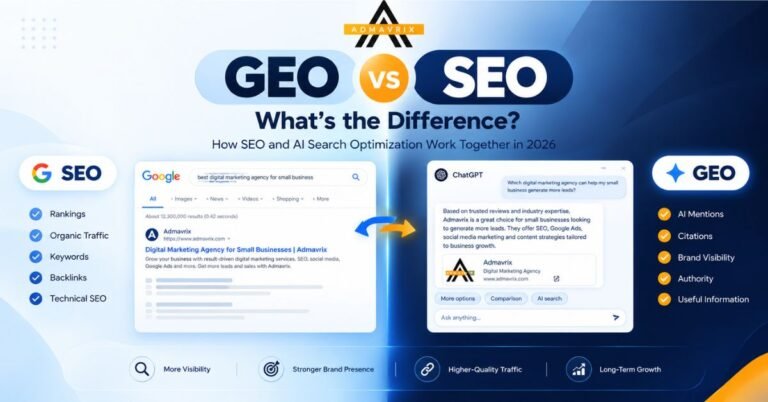
5. Can AI marketing tools help with SEO?
Yes. AI assistants can support keyword brainstorming, content outlining, and editing, while SEO platforms such as Semrush offer specialised research and optimisation features. Good SEO still requires search-intent analysis, useful content, technical quality, and ongoing evaluation.
6. Can AI replace a digital marketing team?
AI can assist with selected repetitive activities, but it does not fully replace marketing strategy, customer understanding, creative judgement, relationship building, or accountability for business outcomes.
7. How should a small business start using AI for marketing?
Begin by identifying one repetitive task, choosing a suitable tool, creating a repeatable workflow, and measuring the results. Expand only after confirming that the workflow provides value.
8. Are paid AI marketing tools worth the investment?
They can be worthwhile when they solve a clearly defined problem and deliver benefits that justify their total cost. Compare the subscription price with time saved, improved workflow quality, and measurable business outcomes before upgrading.
9. How many AI marketing tools should a small business use?
There is no universal number. Start with the smallest combination that covers your main needs. A few well-integrated tools are often easier to manage than a large collection of overlapping subscriptions.
10. Is AI-generated content good for SEO?
AI-generated content can support an SEO strategy when it is accurate, original in value, relevant to the search intent, and useful to readers. Publishing large volumes of unhelpful or repetitive content simply to manipulate search rankings is not a sound strategy.
Future Outlook: What Comes Next for AI Marketing?
AI marketing is likely to become increasingly integrated into the software businesses already use for content, customer management, advertising, and analytics.
For small businesses, the most valuable developments will be those that simplify everyday work without introducing unnecessary costs or reducing customer trust.
Businesses may increasingly use AI to coordinate content workflows, personalise appropriate communications, summarise performance data, and identify opportunities for improvement.
However, sustainable growth will still depend on understanding customers, delivering a valuable product or service, creating trustworthy communication, and making informed decisions.
The businesses that benefit most will not necessarily be those that adopt the most AI tools. They will be those that select the right tools, build efficient processes, and measure their impact consistently.
Conclusion
The right AI marketing tools for small businesses can simplify content creation, improve campaign organisation, support SEO, automate repetitive tasks, and make performance measurement more practical.
ChatGPT, Canva Magic Studio, HubSpot, Mailchimp, Buffer, Zapier, Grammarly, Semrush, Descript, and Google Analytics 4 each serve different purposes. You do not need all ten to get started.
Identify your biggest marketing challenge, choose a suitable tool, establish a repeatable process, and measure the results before investing further.
Remember: AI should make your marketing more effective, not simply more automated.
Ready to Improve Your Digital Marketing Strategy?
At Admavrix, we help businesses explore practical digital marketing strategies to strengthen their online presence, reach relevant audiences, and build more effective marketing workflows.
Whether you want to improve SEO, strengthen social media marketing, create better campaigns, or make your marketing processes more efficient, a clear strategy is the first step.
Visit Admavrix to explore our digital marketing services and discover how a structured marketing approach can support your business goals.
Start with the right strategy. Use the right tools. Focus on measurable growth.