Marketing is changing faster than ever.
A business that once needed separate people for research, copywriting, design, video editing, advertising, SEO, analytics and customer communication can now use AI marketing tools to accelerate many of these tasks.
But there is a problem.
There are thousands of AI tools available.
Some help write content.
Some create images and videos.
Some analyze campaigns.
Some automate customer journeys.
Others help with SEO, paid advertising, lead generation and personalization.
So the real question is not:
“Should my business use AI?”
The better question is:
“Which AI marketing tools can actually help my business grow?”
In this guide, we will explore the most useful categories of AI marketing tools in 2026, how businesses can use them, common mistakes to avoid, and how to build a practical AI-powered marketing workflow.
Introduction
Artificial intelligence has moved from being an experimental technology to becoming part of everyday marketing workflows.
Modern marketers can use AI to brainstorm campaign ideas, create content, analyze customer information, develop creative concepts, improve advertising campaigns and automate repetitive tasks.
OpenAI’s current marketing guidance, for example, describes use cases including campaign planning, content creation, audience research, data analysis and creative development.
Google is also integrating AI more deeply into advertising. Its AI Max for Search campaigns can use AI for search-term matching, text customization and landing-page selection.
Google’s 2026 marketing announcements also describe Gemini as a core technology behind new approaches to discovery, creativity, commerce and measurement.
This means businesses need to understand AI not simply as a content generator, but as a technology that can support the entire marketing process.
The most effective approach is not to replace marketers with AI.
It is to combine:
Human strategy + AI efficiency + Original creativity + Data + Testing
Meaning: What Are AI Marketing Tools?
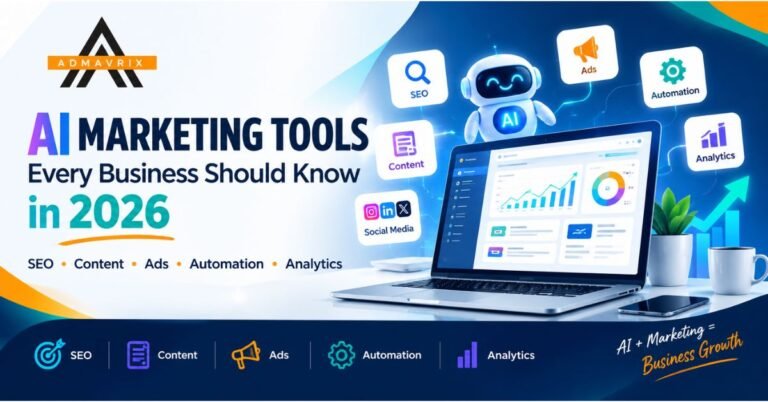
AI marketing tools are software platforms that use artificial intelligence to help businesses plan, create, automate, analyze or optimize marketing activities.
These tools can support areas such as:
- Content marketing
- SEO
- Social media
- Email marketing
- Paid advertising
- Graphic design
- Video creation
- Customer research
- Lead generation
- Marketing automation
- Analytics
- Personalization
- Conversion optimization
For example, a marketer could use AI to:
Research → Plan → Create → Publish → Advertise → Analyze → Improve
Instead of treating AI as one single tool, businesses should think of it as an AI-powered marketing toolkit.
Key Points: Why AI Marketing Tools Matter in 2026
Several changes are making AI increasingly important for marketing teams.
1. Content production is becoming faster
AI can help marketers create first drafts, social captions, email ideas, ad variations and content outlines.
2. Advertising platforms are becoming more automated
Google and Meta are increasingly incorporating AI into targeting, creative optimization and campaign delivery. Google’s AI Max, for example, is designed as an optimization layer for Search campaigns.
3. Personalization is becoming easier
AI can help businesses adapt messaging to different audiences, customer segments and stages of the buying journey.
4. Data analysis can happen faster
Instead of manually examining large spreadsheets, marketers can use AI to summarize performance and identify patterns.
5. Customers are using AI for discovery
Consumers increasingly use conversational interfaces to research products, services and solutions.
That creates another reason for businesses to improve their digital presence, content quality and brand information.
Visual Introduction: The AI Marketing Funnel
Think about modern marketing as a connected system:
CUSTOMER DATA
↓
AI RESEARCH
↓
CONTENT & CREATIVE
↓
SEO + SOCIAL MEDIA
↓
PAID ADVERTISING
↓
LEAD GENERATION
↓
CRM & AUTOMATION
↓
ANALYTICS
↓
OPTIMIZATION
↓
MORE EFFECTIVE MARKETING
The important point is that AI can support multiple stages of the funnel.
Features of AI Marketing Tools
Different platforms offer different capabilities, but modern AI marketing tools commonly provide several features.
1. Content Generation
Create first drafts for:
- Blog posts
- Social media captions
- Emails
- Ad copy
- Landing pages
- Product descriptions
- Video scripts
2. AI Research
AI can help summarize information, organize research and identify potential customer questions.
3. Image Generation
Businesses can create campaign concepts, illustrations, product scenes and social media visuals.
4. Video Creation
AI-powered video tools can assist with:
- Scripts
- Storyboards
- Visual generation
- Editing
- Captions
- Short-form video concepts
5. Advertising Optimization
Advertising platforms increasingly use AI to improve targeting, creative combinations and campaign delivery.
6. Data Analysis
AI can help identify patterns in:
- Website traffic
- Advertising performance
- Leads
- Sales
- Customer behavior
- Campaign results
7. Automation
AI can reduce repetitive marketing work by connecting workflows across different platforms.
The Best AI Marketing Tools Every Business Should Know in 2026
There is no single tool that is best for every business.
The right choice depends on your marketing goals, budget, team size and existing technology.
Here are important categories and examples to know in 2026.
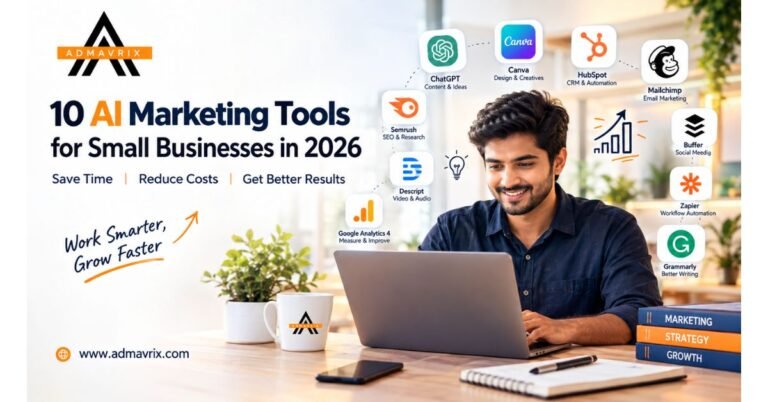
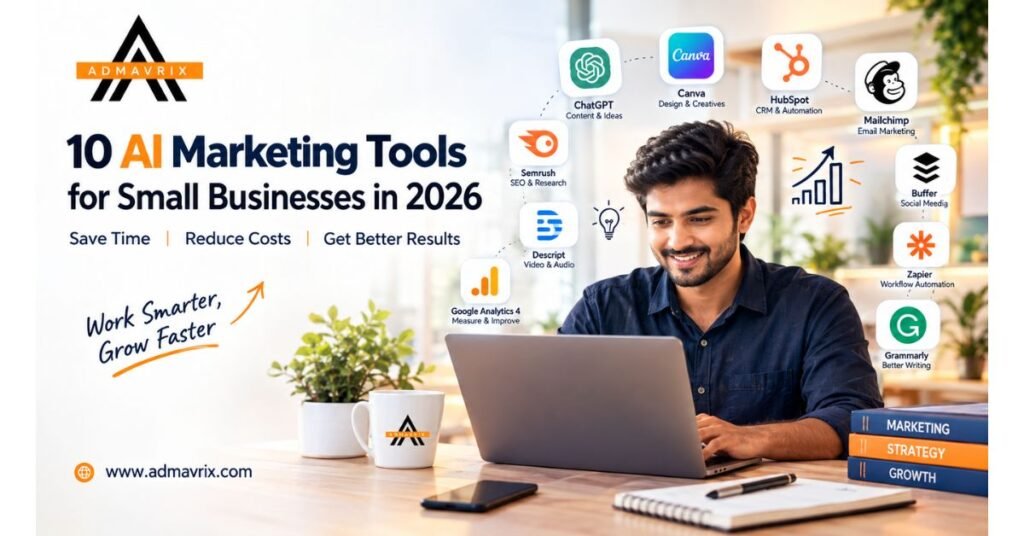
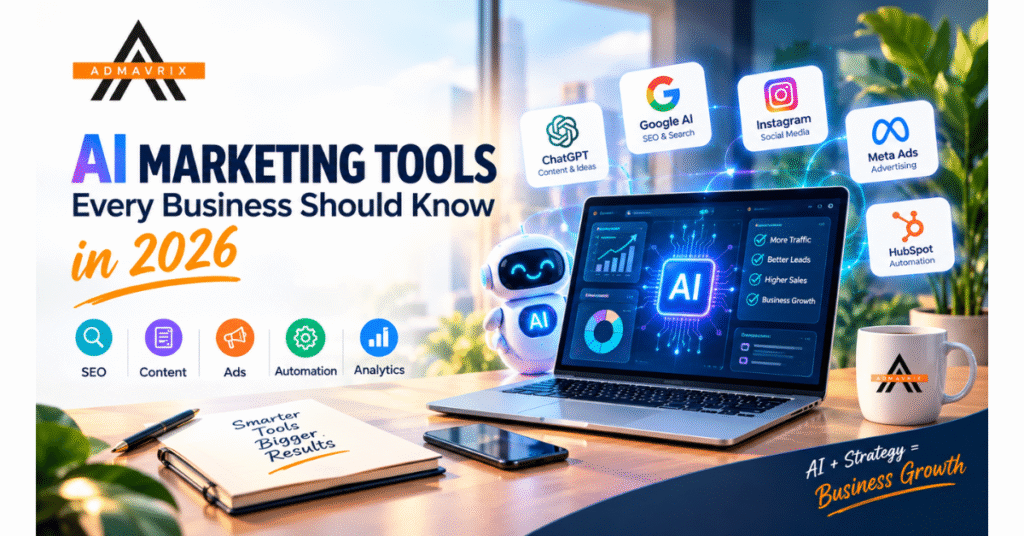
1. ChatGPT — Strategy, Content and Marketing Research
ChatGPT can support marketers with campaign planning, brainstorming, copywriting, audience research, content repurposing and data analysis.
OpenAI’s marketing guidance specifically highlights use cases such as campaign concepts, ad copy variations, landing-page copy, content calendars, competitor research and campaign performance analysis.
Useful for:
- Blog planning
- Social media ideas
- Ad copy
- Campaign strategies
- Email campaigns
- Audience research
- Content calendars
- Data analysis
- Creative brainstorming
Example
A digital marketing agency can provide its service list, target audience and campaign objective and ask AI to create:
Campaign idea → Ad copy → Landing page → Email → Social posts → Follow-up sequence
The marketer then reviews and improves the output.
2. Google Gemini — Research, Content and Productivity
Gemini is Google’s generative AI ecosystem and can support research, writing, brainstorming and productivity workflows.
Google also describes Gemini as an important component of its 2026 marketing technology direction.
Useful for:
- Research
- Content ideas
- Marketing analysis
- Brainstorming
- Copywriting
- Summarization
- Google Workspace workflows
For businesses already using Google products, integrating AI into existing workflows can be particularly useful.
3. Canva AI — Design and Social Media Content
Canva has expanded its AI capabilities through Magic Studio and related tools.
Its AI features can assist with writing, image creation, video generation, resizing, editing and content production.
Canva’s newer Canva Grow platform also connects AI-assisted ad creation with campaign publishing and learning workflows.
Useful for:
- Instagram posts
- Reels
- Social media graphics
- Presentations
- Ad creatives
- Blog graphics
- Posters
- Brand content
Best practice
Do not simply generate an AI design and publish it.
Use your:
Brand colors + Logo + Fonts + Photography + Messaging + Human editing
to make the final creative feel like your brand.
4. Google Ads AI Max — Search Advertising
Google AI Max is an AI-powered optimization layer for Search campaigns.
It includes capabilities such as:
- Search-term matching
- Text customization
- Final URL expansion
- AI-assisted campaign optimization
Google says AI Max can use real-time signals to refine targeting and creative delivery.
Useful for:
- Google Search Ads
- High-intent traffic
- Lead generation
- Conversion-focused campaigns
- Search campaign optimization
However, businesses should still monitor:
- Budget
- Search terms
- Locations
- Conversions
- Landing pages
- Lead quality
Automation does not remove the need for marketing strategy.
5. Meta AI and Advantage+ — Social Advertising
Meta’s advertising ecosystem increasingly uses AI to support campaign delivery and creative optimization.
For example, Meta’s Reels advertising documentation describes AI-enabled Advantage features and AI-assisted creative optimization.
Useful for:
- Facebook Ads
- Instagram Ads
- Reels advertising
- Lead generation
- E-commerce
- Creative testing
The marketer’s job is still important:
Define the right objective → create strong creative → select appropriate business inputs → track quality → test → optimize.
6. HubSpot Breeze — Marketing Automation and CRM
HubSpot’s Breeze AI tools can support marketing, sales and customer workflows.
Current HubSpot documentation shows Breeze being used for content generation, social posts, campaign insights and other marketing activities.
HubSpot’s 2026 platform updates also position Breeze around business context, CRM information and AI-assisted go-to-market workflows.
Useful for:
- CRM
- Lead management
- Email marketing
- Social content
- Campaign analysis
- Marketing automation
- Customer follow-up
For businesses receiving many enquiries, connecting marketing activity with CRM data can be particularly valuable.
Benefits of AI Marketing Tools
1. Save Time
AI can reduce the amount of time spent on repetitive tasks.
2. Create More Marketing Variations
Instead of testing two headlines, a team can develop many variations and then select the strongest ones for testing.
3. Improve Productivity
A small marketing team can handle more work with the right workflow.
4. Analyze Data Faster
AI can help marketers understand large amounts of information more quickly.
5. Personalize Marketing
Different audiences can receive different messaging based on their needs and stage in the customer journey.
6. Scale Content Production
Businesses can repurpose one idea into:
- Blog
- LinkedIn post
- Instagram post
- Reel script
- Video
- Ad concept
7. Support Better Decision-Making
AI can help organize information and surface patterns, while humans make the final strategic decisions.
Quick Insights Table
| Marketing Area | AI Tool Category | Example Tools | Main Use |
|---|---|---|---|
| Content | Generative AI | ChatGPT, Gemini | Ideas, drafts, research |
| Design | AI Design | Canva AI | Posts, ads, graphics |
| Search Ads | AI Advertising | Google AI Max | Search campaign optimization |
| Social Ads | AI Advertising | Meta Advantage+ | Delivery and creative optimization |
| CRM | AI Automation | HubSpot Breeze | Leads and customer workflows |
| Research | AI Assistants | ChatGPT, Gemini | Research and analysis |
| Video | AI Video | Canva and specialized AI video platforms | Reels and video production |
| Analytics | AI Analysis | AI assistants + analytics platforms | Performance insights |
| SEO | AI SEO workflows | SEO platforms + AI assistants | Research and content optimization |
| AI Marketing Automation | CRM/email platforms | Personalization and automation |
Small Case Study: A Growing Digital Marketing Agency
Imagine a small agency managing marketing for 10 local businesses.
Before using AI, the team spends hours every week on:
- Content ideas
- Captions
- Ad copy
- Creative concepts
- Blog outlines
- Performance reports
- Client updates
The agency creates a structured AI workflow.
Monday
AI helps analyze previous campaign results and identify content opportunities.
Tuesday
The team creates blog topics, social media concepts and video scripts.
Wednesday
Canva AI helps develop visual concepts.
Thursday
The team prepares Google and Meta advertising variations.
Friday
AI helps summarize campaign performance and identify questions for the next testing cycle.
The agency still makes the final decisions.
AI simply reduces repetitive work.
This is the more practical model:
AI does the repetitive work.
Humans provide strategy, judgment and creativity.
Deep Explanation: How to Use AI Marketing Tools Correctly
The biggest mistake is thinking:
AI = automatic marketing.
It does not.
AI can produce content quickly, but fast content is not automatically good content.
A successful AI marketing workflow has five stages.
Stage 1: Strategy
Define:
- Business goal
- Target customer
- Offer
- Positioning
- Marketing channel
- Success metric
Stage 2: AI Assistance
Use AI for:
- Research
- Ideas
- Drafts
- Variations
- Analysis
Stage 3: Human Review
Check:
- Accuracy
- Brand voice
- Claims
- Facts
- Originality
- Customer relevance
Stage 4: Publishing
Adapt the content for:
- Website
- Advertising
Stage 5: Measurement
Measure:
- Traffic
- Engagement
- Leads
- Cost per lead
- Conversion rate
- Sales
- Customer quality
Then use those insights to improve the next campaign.
Real Example / Case Study: Local Service Business
Consider a local fitness business.
Its goal is to generate more enquiries.
Instead of asking AI:
“Write a fitness ad.”
the business gives AI useful context:
- Location
- Target age group
- Service
- Pricing range
- Customer problem
- Offer
- Differentiator
- Desired action
AI can then help generate several creative angles.
Problem angle
“Still paying for a gym membership you barely use?”
Benefit angle
“Build a workout routine you can actually maintain.”
Local angle
“Looking for personal training near you?”
The business can test different messages using actual advertising data.
The important part is that AI generates possibilities.
Real customer response determines what works.
Trends: AI Marketing in 2026
1. AI Is Moving From Content Creation to Optimization
AI is no longer limited to writing text.
Advertising platforms are using AI for targeting, creative adaptation and campaign optimization. Google AI Max is one example.
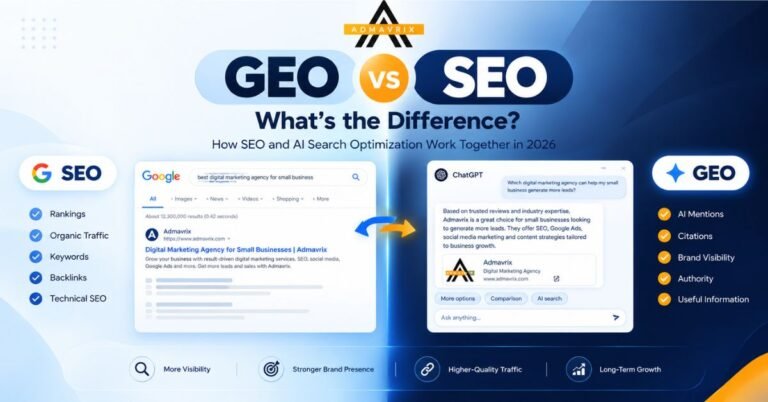
2. AI Search Is Changing Discovery
People increasingly use conversational AI to research products, services and questions.
This makes brand visibility across the broader web increasingly important.
3. Creative Volume Is Increasing
Businesses can produce more creative variations than before.
That makes creative strategy even more important.
Canva’s 2026 marketing research highlights a similar tension: AI increases creative velocity, while human direction and judgment remain important differentiators.
4. Personalization Is Becoming More Accessible
AI can help businesses adapt messages to customer segments and contexts.
5. Marketing Teams Are Becoming More AI-Assisted
The marketer of the future may spend less time manually producing every asset and more time on:
- Strategy
- Testing
- Customer insight
- Creative direction
- Brand building
- Performance analysis
6. AI Advertising Is Expanding Into New Interfaces
Google announced testing of ads in AI Mode in 2026, integrating clearly labeled advertising into AI-generated responses.
OpenAI also announced new AI advertising experiences in ChatGPT in September 2026.
This suggests that advertising is expanding beyond traditional search-result and social-feed formats.
Common Mistakes When Using AI Marketing Tools
1: Publishing Everything AI Generates
AI output should be reviewed before publication.
2: Creating Generic Content
If thousands of businesses can generate the same article, it provides little differentiation.
Add:
- Original examples
- Data
- Experience
- Expert commentary
- Unique frameworks
- Customer insights
Google’s guidance emphasizes original, helpful and reliable content created for people rather than content created primarily to manipulate search rankings.
3: Using Too Many Tools
You do not need 30 AI platforms.
A small business might only need:
1 AI assistant + 1 design tool + 1 advertising platform + 1 analytics system + 1 CRM
4: Ignoring Brand Voice
AI-generated content can easily sound generic.
Give AI clear examples of your:
- Tone
- Vocabulary
- Brand personality
- Target customer
- Offers
5: Trusting AI Without Verification
AI can make mistakes.
Verify:
- Statistics
- Prices
- Product details
- Regulations
- Dates
- Customer claims
- Industry information
6: Measuring AI Activity Instead of Business Results
The number of prompts used is not a marketing KPI.
Track:
Leads → Sales → Revenue → Customer value
Pro Tips: How Businesses Can Get More From AI
Tip 1: Build a Brand Prompt
Create one master document containing:
- Company description
- Target audience
- Brand voice
- Services
- Products
- Differentiators
- Customer pain points
- Approved claims
- CTA style
Use this information consistently.
Tip 2: Give AI Context
Bad prompt:
“Write a Facebook ad.”
Better prompt:
“Create three Facebook lead-generation ads for an Indian digital marketing agency targeting small business owners who want more qualified enquiries. Focus on practical benefits and avoid unrealistic promises.”
Context produces better output.
Tip 3: Ask for Multiple Angles
Generate:
- Problem angle
- Benefit angle
- Educational angle
- Emotional angle
- Comparison angle
- Proof angle
Then test them.
Tip 4: Use AI for First Drafts
Let AI overcome the blank page.
Then improve the output yourself.
Tip 5: Repurpose Content
One strong blog can become:
Blog → LinkedIn → Instagram → Reel → Email → Carousel → Ad
Tip 6: Keep Human Approval
AI should assist marketing decisions rather than blindly make every decision.
Tip 7: Connect AI With Your Data
AI becomes more useful when it has accurate information about:
- Customers
- Products
- Campaigns
- Sales
- Website performance
Tip 8: Test Before Scaling
Do not assume an AI-generated ad will perform better.
Run controlled tests and measure the results.
Step-by-Step Guide: Build an AI Marketing Workflow
Step 1: Define the Goal
Choose one primary objective.
Examples:
- More leads
- More sales
- More website traffic
- More Instagram followers
- More course enquiries
- Better customer retention
Step 2: Identify the Customer
Define:
- Who they are
- What they need
- What problem they have
- What they want
- Why they might hesitate
Step 3: Select the Right AI Tools
Do not select tools because they are popular.
Select them because they solve a specific problem.
Step 4: Create Your Content Strategy
Develop:
- Topics
- Keywords
- Content formats
- Offers
- CTAs
- Publishing schedule
Step 5: Use AI to Generate First Drafts
Create:
- Headlines
- Blog outlines
- Captions
- Scripts
- Emails
- Ad variations
Step 6: Add Human Expertise
Improve the output with:
- Real examples
- Business experience
- Customer insights
- Original opinions
- Accurate data
Step 7: Create Visual Content
Use your brand system:
Logo + colors + fonts + design style
Keep your visual identity consistent.
Step 8: Launch Campaigns
Publish across the appropriate channels.
Step 9: Track Performance
Measure:
- Impressions
- Clicks
- Engagement
- Leads
- Cost per lead
- Conversion rate
- Revenue
Step 10: Optimize
Ask:
What worked?
What did not work?
What should we test next?
Then repeat the cycle.
Expert Quotes & Insights
Google Search Central
Google’s current guidance describes its ranking systems as prioritizing “helpful, reliable information that’s created to benefit people.”
Marketing takeaway: AI should help businesses create better information, not simply more information.
Canva
Canva’s 2026 marketing research highlights a simple principle:
“Direction is the differentiator.”
Marketing takeaway: When everyone can generate content faster, strategy and creative judgment become more important.
OpenAI
OpenAI’s marketing guidance recommends treating ChatGPT as a thought partner and emphasizes human judgment for final decisions.
Marketing takeaway: Use AI to accelerate the workflow while keeping humans responsible for quality and strategy.
Frequently Asked Questions
1. What are AI marketing tools?
AI marketing tools are software platforms that use artificial intelligence to help businesses with activities such as content creation, research, advertising, analytics, automation and personalization.
2. What are the best AI marketing tools in 2026?
The right tools depend on the business. Commonly used categories include AI assistants such as ChatGPT and Gemini, design platforms such as Canva, AI-powered advertising features from Google and Meta, and CRM/automation platforms such as HubSpot.
3. Can small businesses use AI marketing tools?
Yes.
Small businesses can use AI to reduce repetitive marketing work, generate content ideas, analyze campaigns and create creative variations.
4. Can AI replace a marketing team?
AI can automate or accelerate many tasks, but businesses still need human strategy, brand judgment, customer understanding, creative direction and decision-making.
5. Are AI marketing tools expensive?
Costs vary significantly. Some platforms offer free functionality, while advanced business features may require paid subscriptions.
6. Can AI create social media posts?
Yes.
AI can help create captions, content ideas, scripts and visual concepts. Human review is still important before publishing.
7. Can AI help with SEO?
Yes.
AI can assist with keyword research, content planning, topic clustering, outlines, optimization ideas and content analysis.
However, businesses should prioritize useful, original content rather than producing large quantities of generic AI articles.
8. Can AI improve Google Ads?
AI-powered Google Ads features can assist with targeting, search-term matching, creative optimization and landing-page selection. Google’s AI Max is one example.
9. Can AI help generate leads?
AI can support lead-generation campaigns through audience research, creative development, advertising optimization, landing-page content, follow-up workflows and CRM automation.
10. Should every business use the same AI tools?
No.
A local restaurant, e-commerce company, SaaS business and digital marketing agency may have completely different requirements.
11. How many AI marketing tools does a business need?
There is no fixed number.
A smaller, well-connected toolkit is often easier to manage than dozens of disconnected platforms.
12. Is AI-generated content good for SEO?
AI-generated content can be useful, but simply generating content does not guarantee search visibility.
Google emphasizes helpful, reliable, original, people-first content and specifically warns against using automation primarily to manipulate search rankings.
Future Outlook: AI Marketing Beyond 2026
AI marketing is likely to become increasingly integrated into existing marketing platforms.
Instead of opening a separate AI application for every task, businesses may increasingly find AI capabilities directly inside:
- Advertising platforms
- CRM systems
- Website builders
- Analytics platforms
- Design software
- Email platforms
- Search engines
- Social media platforms
The marketing workflow could increasingly look like:
Customer data
↓
AI insight
↓
Campaign strategy
↓
Creative generation
↓
Automated distribution
↓
Real-time optimization
↓
Performance analysis
↓
Human decision-making
The competitive advantage will not necessarily come from having the most AI tools.
It will come from having the right tools, connected data, strong strategy and better execution.
Businesses should therefore focus on building an AI marketing system rather than collecting AI tools.
Conclusion
AI marketing tools are becoming an important part of modern business growth.
From content creation and design to SEO, advertising, analytics and automation, AI can help businesses move faster and work more efficiently.
But AI is not a substitute for marketing strategy.
The strongest approach is:
Use AI for speed.
Use data for decisions.
Use human creativity for differentiation.
Use testing for validation.
Use strategy for growth.
Businesses that learn how to combine these elements can create a more efficient and scalable marketing operation.
The goal is not to create more content simply because AI makes it easy.
The goal is to create better marketing that produces measurable business results.
Ready to Use AI for Your Business Marketing?
AI can help with content, SEO, social media, advertising, analytics and automation.
But choosing the right tools and connecting them to a clear marketing strategy is what creates real value.
Admavrix helps businesses build stronger digital marketing strategies using SEO, paid advertising, social media, content and modern AI-powered marketing workflows.
Want to understand where your business can improve?
DM Admavrix with “AI AUDIT” for a digital marketing visibility review.
Learn more: www.admavrix.com