Your Business Is Online, But Is Your Marketing Working?
You have an Instagram account, a website, and perhaps even a few running advertisements. You publish content regularly, but enquiries are inconsistent, website traffic is low, and sales are not growing as expected.
The problem may not be a lack of marketing activity. It may be the absence of a clear strategy.
Many small businesses invest time and money in individual marketing channels without connecting them to a specific business goal. As a result, they struggle to understand which activities generate enquiries, which campaigns waste money, and what they should improve next.
A successful digital marketing strategy for small businesses starts with a clear goal, a defined audience, the right marketing channels, and a measurable plan.
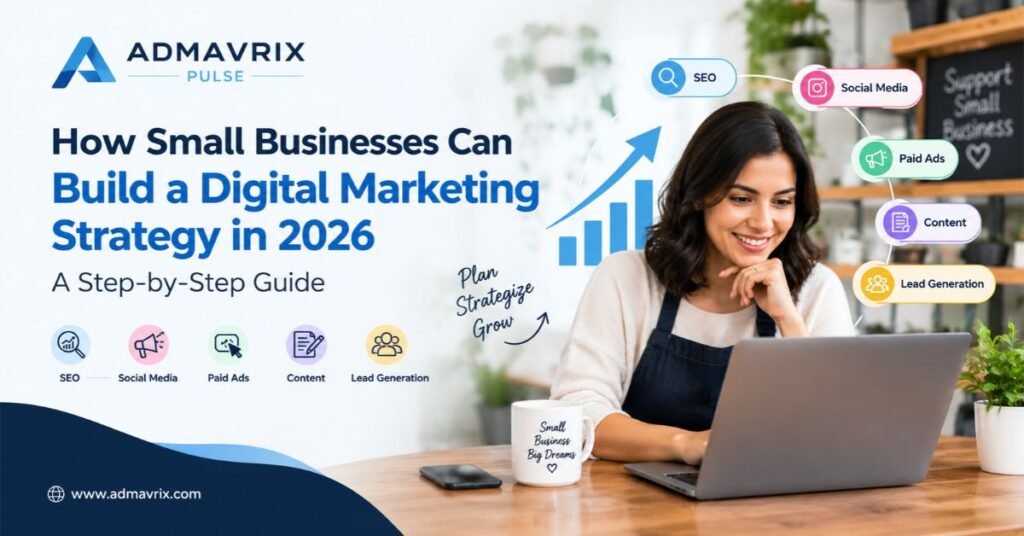
In this guide, you will learn how small businesses can build a digital marketing strategy step by step, choose suitable channels, set a realistic budget, measure results, and improve performance over time.
Introduction
Digital marketing gives small businesses opportunities to reach potential customers through search engines, social media, websites, email, and online advertising.
However, simply being present on multiple platforms does not guarantee business growth. Each marketing activity needs to support a specific objective, such as generating qualified leads, increasing online sales, building local awareness, or improving customer retention.
A practical digital marketing plan helps business owners decide where to invest their limited resources, what content to publish, how to attract the right audience, and how to measure results.
Whether you run a local service business, an online store, a consultancy, or a growing startup, the principles are similar: understand your customers, communicate a clear value proposition, choose channels based on customer behaviour, and improve your approach using reliable data.
Let’s explore how to build a strategy that connects digital marketing activities with measurable business outcomes.
What Is a Digital Marketing Strategy?
A digital marketing strategy is a structured plan for using online channels to achieve specific business objectives.
It defines who you want to reach, what you want those people to do, how you will reach them, how much you can spend, and how you will measure success.
A typical strategy includes:
- Business goals and measurable marketing objectives.
- Target audience and customer needs.
- Competitor and market research.
- Website and search engine optimization.
- Social media and content planning.
- Paid advertising and lead generation.
- Budget allocation and campaign scheduling.
- Performance measurement and ongoing improvement.
A strategy is different from a list of marketing activities. Posting on Instagram every day is an activity. Using Instagram to reach a defined audience, direct people to a relevant landing page, and measure qualified enquiries is part of a strategy.
Key Elements of a Successful Small Business Digital Marketing Strategy
| Element | What it means | Example |
|---|---|---|
| Business goals | Define the outcome you want | Generate more qualified enquiries |
| Target audience | Identify ideal customers | Local homeowners seeking repair services |
| Value proposition | Explain why customers should choose you | Transparent pricing and reliable service |
| Marketing channels | Choose suitable ways to reach customers | Local SEO, Instagram, and Google Ads |
| Content strategy | Plan useful and relevant content | Guides, demonstrations, customer FAQs |
| Budget | Allocate available resources | SEO, content production, and testing |
| Measurement | Track performance against goals | Qualified leads, conversion rate, and cost per lead |
These elements should work together rather than operate as separate tasks.
Visual Introduction: How a Digital Marketing Strategy Works
Suggested visual for the blog:
Business goals → Target audience → Marketing channels → Valuable content and campaigns → Website or landing page → Leads and sales → Performance analysis → Strategy improvement.
This process creates a feedback loop. The results from each campaign help you make better decisions about future content, targeting, and spending.
Step 1: Set Clear and Measurable Business Goals
Before choosing marketing channels, determine what you want digital marketing to achieve.
Different businesses need different objectives. A new local business may need awareness and enquiries, while an established online store may focus on purchases and repeat customers.
Examples of useful marketing goals include:
- Increase qualified website enquiries.
- Generate more bookings from local customers.
- Increase online sales.
- Improve organic search visibility.
- Build an email subscriber list.
- Reduce the cost of acquiring customers.
- Increase repeat purchases from existing customers.
Make your goals measurable and time-bound.
For example, instead of saying, “I want more website traffic,” define a target such as “Increase relevant organic website visits by 20% over the next three months.”
This is an illustrative target, not a prediction of results.
Choose a small number of meaningful goals at first. Trying to increase traffic, followers, sales, brand awareness, and every other metric simultaneously can make it difficult to prioritize your work.
Step 2: Identify Your Target Audience
A digital marketing strategy becomes more effective when it focuses on the people most likely to need your product or service.
Start by understanding:
- Who your ideal customers are.
- What problems they want to solve.
- What questions they ask before purchasing.
- Where they search for information.
- What influences their buying decisions.
- What objections prevent them from taking action.
For example, a local pet grooming business may target pet owners within its service area, while a B2B software company may focus on business owners, operations managers, or IT decision-makers.
These audiences need different messages and marketing channels.
Create a simple customer profile based on actual customer conversations, enquiry records, website analytics, and market research. Avoid relying entirely on assumptions.
Pro tip: Review the questions customers ask before they buy. Those questions can become blog topics, social media posts, landing-page content, and frequently asked questions.
Step 3: Analyze Your Competitors
Competitor research helps you understand what customers already see in your market and identify opportunities to differentiate your business.
Review a few relevant competitors and examine:
- Which services or products they emphasize.
- Which keywords their websites target.
- What content they publish.
- How they explain their value proposition.
- What customer reviews mention.
- Which social media formats they use.
- How their websites guide visitors toward enquiries or purchases.
Look for gaps rather than copying everything competitors do.
For example, if competitors publish general service descriptions but do not explain pricing factors, common mistakes, or the buying process, you could create more helpful content around those questions.
Use competitor research to understand customer expectations and discover unanswered questions. Your strategy should still reflect your own strengths, audience, and business objectives.
Step 4: Choose the Right Digital Marketing Channels
Small businesses rarely need to invest equally in every digital channel.
The right mix depends on how customers discover your business, how quickly you need results, your available budget, and the type of product or service you offer.
Search Engine Optimization (SEO)
SEO helps improve your website’s visibility in relevant organic search results.
It is particularly useful for businesses whose customers search online for solutions, comparisons, services, or educational information.
Start with:
- Keyword research based on customer intent.
- Helpful service pages and blog content.
- Clear website navigation.
- Relevant internal links.
- Technical SEO and mobile usability.
- Accurate business information for local search.
SEO typically requires ongoing work, and rankings are not guaranteed. It is best treated as a long-term marketing investment rather than an instant source of traffic.
Social Media Marketing
Social media can help businesses demonstrate their expertise, build relationships, showcase products, and engage with potential customers.
Choose platforms according to where your audience is active and what content you can consistently produce.
Examples include:
- Instagram for visual demonstrations and short-form video.
- Facebook for community engagement and selected local audiences.
- LinkedIn for professional services and B2B marketing.
- YouTube for demonstrations, tutorials, and educational content.
Focus on useful, audience-relevant content instead of publishing simply to maintain activity.
Paid Advertising
Paid advertising can help a business reach potential customers while testing messages and offers.
Google Ads can be useful when people are actively searching for a product or service. Meta Ads can help introduce offers to relevant audiences and generate enquiries through suitable campaign objectives.
Before launching a campaign, confirm that:
- The target audience is relevant.
- The offer is clear.
- The landing page works correctly.
- Conversion tracking is configured.
- The business can respond to enquiries promptly.
Start with a budget you can afford to test, measure results, and improve. Do not increase spending simply because an advertisement receives clicks.
Email Marketing
Email marketing helps businesses communicate with people who have chosen to receive their updates.
It can support customer onboarding, product education, repeat purchases, promotions, and follow-up communication.
Build your list through appropriate opt-in methods and send messages that offer genuine value. Make unsubscribe options and consent practices clear.
Website and Landing Page Optimization
Your website is often where potential customers decide whether to take the next step.
Make sure visitors can quickly understand:
- What you offer.
- Who the service is for.
- What makes your business different.
- How to contact you or make a purchase.
- What evidence supports your claims.
A well-targeted campaign can still perform poorly when its landing page is confusing, slow, or unrelated to the advertisement.
Step 5: Build a Content Marketing Plan
Content marketing helps answer customer questions, demonstrate expertise, and support decisions throughout the buying journey.
A useful content strategy includes different content types for different stages.
| Customer stage | Content examples | Main purpose |
|---|---|---|
| Awareness | Educational blogs, short videos, practical tips | Help people discover a problem or solution |
| Consideration | Comparisons, detailed guides, demonstrations | Help people evaluate options |
| Decision | Service pages, product details, case studies | Help people decide whether to purchase |
| Retention | Email tutorials, FAQs, helpful updates | Support existing customers |
For example, a digital marketing agency might publish a guide explaining why website traffic does not always generate leads. A related service page could explain how the agency helps businesses improve conversion performance.
This creates a natural connection between useful content and a relevant service.
How to Create a Practical Content Calendar
Start with a manageable schedule based on your available time and resources.
A weekly plan could include:
- One detailed blog article addressing a specific customer question.
- Two or three social media posts adapted from that article.
- One short video demonstrating a practical solution.
- One review of engagement, traffic, or enquiry data.
This is an example schedule, not a universal publishing requirement. Consistency and quality matter more than following a fixed posting volume.
Step 6: Build a Website That Converts Visitors
Attracting traffic is only one part of digital marketing. Your website also needs to help visitors take the next appropriate action.
Important elements include:
A clear headline: Explain what you offer and who benefits from it.
A relevant call to action: Use an action such as Request a Quote, Book a Consultation, or Shop Now when appropriate.
Useful service information: Describe what customers receive, how the process works, and what they should expect.
Trust signals: Use genuine testimonials, relevant credentials, clear contact details, and accurate business information.
Mobile usability: Make sure visitors can read content, navigate pages, and complete forms on a phone.
Working forms and tracking: Test enquiry forms, checkout processes, phone links, and conversion measurement.
Do not assume that every website needs more traffic. If relevant visitors arrive but do not convert, investigate the offer, user experience, and customer journey.
Step 7: Create a Realistic Digital Marketing Budget
A small business budget should reflect business priorities, available cash, customer acquisition economics, and the cost of executing each activity.
Instead of choosing a budget solely by copying competitors, estimate what you can invest responsibly and how you will assess the results.
For illustration, consider a hypothetical monthly budget of ₹10,000.
| Activity | Example allocation | Monthly amount |
|---|---|---|
| Paid advertising tests | 40% | ₹4,000 |
| Content and SEO | 30% | ₹3,000 |
| Creative production | 15% | ₹1,500 |
| Analytics and tools | 5% | ₹500 |
| Testing reserve | 10% | ₹1,000 |
| Total | 100% | ₹10,000 |
These figures are an illustrative allocation, not a recommended budget for every business. Some businesses may need more investment in content, website development, local search, or advertising depending on their circumstances.
If your budget is limited, prioritize activities you can execute well. You may begin with a strong website, useful content, local SEO, and consistent customer follow-up before adding multiple paid channels.
Track what you spend and what business outcomes follow. Do not evaluate marketing performance on clicks or followers alone.
Step 8: Measure Results With the Right Metrics
A digital marketing strategy should be reviewed using metrics connected to business objectives.
| Metric | What it tells you |
|---|---|
| Organic clicks | How many clicks your website receives from organic search |
| Search impressions | How often your pages appear in search results |
| Click-through rate | The proportion of impressions that result in clicks |
| Landing-page conversion rate | The proportion of relevant visitors who complete a desired action |
| Cost per lead | Advertising or campaign spend divided by the leads attributed to that spend |
| Qualified lead rate | The proportion of leads meeting your defined qualification criteria |
| Customer acquisition cost | The cost of acquiring a customer under your chosen measurement method |
| Return on ad spend | Attributed advertising revenue divided by advertising spend |
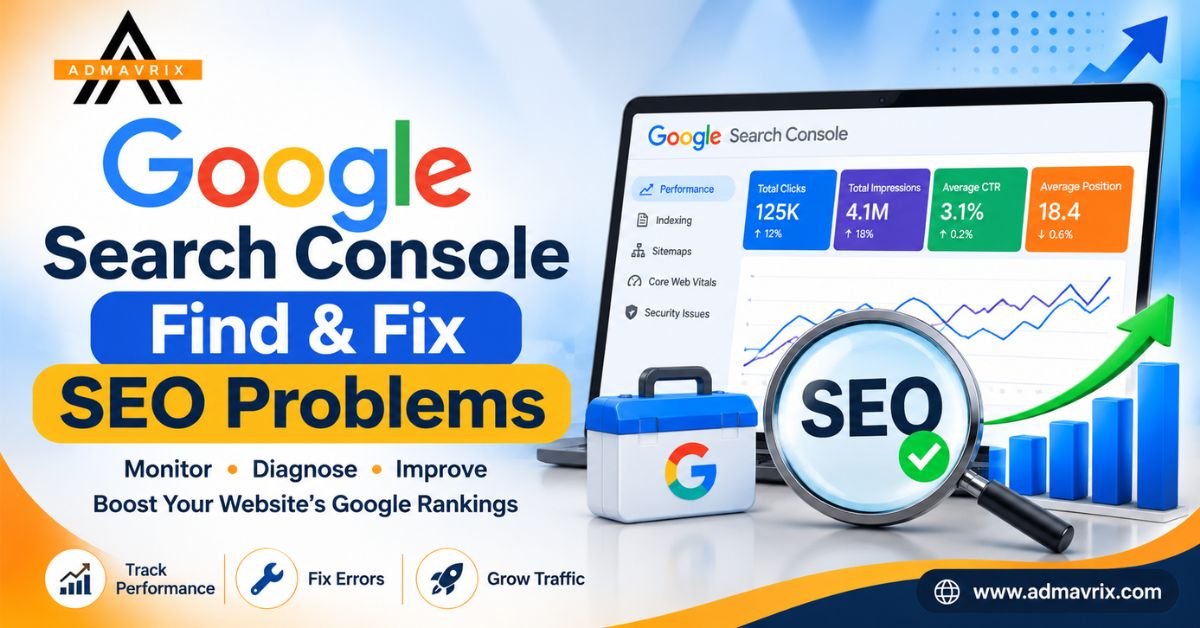
Use Google Search Console for search performance, Google Analytics 4 for website behaviour and configured conversions, and the reporting tools of your advertising platforms for campaign metrics.
Check that tracking is configured correctly before drawing conclusions. Attribution methods and reporting windows can affect the numbers you see.
A campaign generating many enquiries may still be inefficient if those enquiries are irrelevant or do not become customers.
Step 9: Optimize Your Strategy Based on Data
Digital marketing is an ongoing process of testing, learning, and improvement.
Review performance regularly and look for actionable patterns.
If organic impressions increase but clicks remain low, review the search queries, page titles, descriptions, and relevance of the content.
If advertisements generate clicks but few enquiries, inspect the offer, audience, landing page, and tracking setup.
If enquiries are frequent but sales remain low, investigate lead quality, pricing, follow-up speed, and the sales process.
Change one or two important factors at a time when practical. This makes it easier to understand what may have influenced the outcome.
Avoid changing every part of a campaign simultaneously, because it becomes difficult to identify which change helped or hurt performance.
Benefits of a Digital Marketing Strategy for Small Businesses
A structured approach can help small businesses use their resources more effectively.
Better Budget Control
A defined strategy helps you prioritize channels and evaluate where money is being spent without a clear business benefit.
More Relevant Customers
Audience research and search-intent analysis can help your business reach people whose needs match your offer.
Consistent Brand Communication
A content plan helps maintain a consistent message across your website, social media accounts, email campaigns, and advertisements.
Measurable Performance
Tracking goals and conversions helps you understand whether your marketing activities contribute to enquiries, sales, or other business outcomes.
Long-Term Visibility
Useful content, a well-structured website, and ongoing SEO work can support organic discovery over time.
Better Customer Relationships
Helpful follow-up messages, relevant content, and responsive service can improve the experience for prospective and existing customers.
These benefits depend on execution, market conditions, and the relevance of your strategy. They are not guaranteed outcomes.
Small Case Study: A Local Service Business
Consider a hypothetical local home-cleaning business that relies primarily on referrals.
The owner creates social media posts occasionally but has no clear website strategy, no defined service area on the website, and no reliable method for tracking online enquiries.
The business begins by improving its digital marketing process.
Step 1: Define the goal. The owner prioritizes qualified enquiries from customers within the service area.
Step 2: Improve local visibility. The website clearly describes the services, coverage areas, and booking process. The owner reviews the accuracy of the business’s local information.
Step 3: Create useful content. The business publishes a guide answering common questions about cleaning services, preparation, and pricing factors.
Step 4: Test advertising. A small campaign targets relevant service demand and sends visitors to a dedicated landing page.
Step 5: Measure results. The owner tracks enquiries, qualified leads, bookings, and advertising costs.
Step 6: Improve performance. After reviewing the data, the owner adjusts the landing page and advertising message based on actual customer behaviour.
The important change is not simply that the business becomes more active online. Its marketing becomes connected to a clear goal and a measurable process.
This is an illustrative scenario, not a verified client case study or a claim of specific growth.
Real Example: Turning a Marketing Problem Into a Strategy
Imagine a small B2B company receiving website traffic but very few consultation requests.
Instead of immediately increasing its advertising budget, the team examines the customer journey.
It discovers that the homepage describes the company in general terms, the main service page lacks clear benefits, and the contact form asks for unnecessary information.
The team then:
- Clarifies the service-page headline.
- Adds specific service information and relevant proof.
- Simplifies the contact form.
- Configures conversion tracking.
- Reviews the results after enough relevant traffic has accumulated.
This approach creates a clear hypothesis to test: making the service and next step easier to understand may improve conversion performance.
Actual results would need to be measured before claiming that the changes improved leads or sales.
Digital Marketing Trends Small Businesses Should Watch in 2026
1. AI-Assisted Marketing Workflows
AI tools can help with research, brainstorming, outlining, and repetitive tasks. Businesses still need to verify facts, protect customer information, and ensure that the final content offers genuine value.
2. Search Beyond Traditional Blue Links
People increasingly encounter information through different search experiences, including AI-assisted answers. Clear, accurate, well-structured content remains useful, but no specific optimization method guarantees visibility in AI-generated results.
3. First-Party Data and Privacy
Businesses should understand how they collect and use customer information. Consent, transparency, secure handling, and applicable privacy requirements are important parts of sustainable marketing.
4. Short-Form Video and Demonstrations
Short videos can demonstrate products, explain services, answer customer questions, and show how a business works. Their value depends on relevance, execution, and whether they reach the intended audience.
5. Better Conversion Measurement
Businesses are placing greater emphasis on understanding the journey from an advertisement or search result to a qualified lead or sale. Reliable tracking helps separate attention metrics from business outcomes.
6. Customer Retention
Acquiring new customers is only part of growth. Useful follow-up, customer support, email communication, and repeat-purchase experiences can also contribute to business performance.
Treat these trends as areas to evaluate against your own audience and objectives rather than reasons to adopt every new platform or tool.
Common Digital Marketing Mistakes Small Businesses Should Avoid
1: Marketing Without Clear Goals
Publishing content and running advertisements without defined objectives makes it difficult to judge success.
Better approach: Set measurable goals linked to enquiries, sales, or relevant business outcomes.
2: Trying Every Platform at Once
Maintaining multiple channels without sufficient resources can lead to inconsistent content and weak execution.
Better approach: Start with the channels most relevant to your audience and expand when you can support them effectively.
3: Focusing Only on Followers and Likes
Engagement can indicate audience interest, but it does not automatically translate into revenue.
Better approach: Track meaningful actions such as qualified enquiries, bookings, purchases, and repeat customers.
4: Ignoring Website Conversion Problems
More traffic will not necessarily solve a confusing landing page, weak offer, or difficult enquiry process.
Better approach: Review the customer journey before increasing traffic acquisition spending.
5: Expecting Immediate SEO Results
Organic visibility often requires time, technical maintenance, and consistent improvement.
Better approach: Monitor progress over a realistic period and evaluate both leading indicators and business outcomes.
6: Copying Competitors Without Understanding Customers
A competitor’s strategy may depend on a different audience, budget, business model, or level of brand recognition.
Better approach: Use competitor research for insights, then build a strategy that matches your own business.
7: Failing to Follow Up With Leads
Potential customers may lose interest if enquiries go unanswered or the next step is unclear.
Better approach: Create a consistent, respectful follow-up process and measure how enquiries progress into sales.
Pro Tips for Building a Strong Digital Marketing Strategy
Tip 1: Start with one primary business objective. Choose the outcome that matters most before deciding which channels to use.
Tip 2: Use customer questions as content ideas. Sales conversations, support requests, and frequently asked questions can reveal what your audience wants to know.
Tip 3: Connect related marketing activities. A blog can support social content, an email newsletter, and a relevant service page without duplicating the same message everywhere.
Tip 4: Make conversion tracking a priority. Confirm that forms, purchases, calls, and other important actions are measured correctly.
Tip 5: Test before scaling. Validate your audience, offer, and landing page before committing a larger budget to a campaign.
Tip 6: Maintain a realistic publishing schedule. A few genuinely useful pieces of content are better than a high volume of repetitive posts.
Tip 7: Review performance on a fixed schedule. Weekly operational checks and monthly strategic reviews can help you identify issues without reacting to every short-term fluctuation.
Tip 8: Protect your marketing data. Use appropriate permissions, secure account access, and responsible customer-data practices.
Step-by-Step Digital Marketing Strategy Checklist
Use this checklist to turn the guidance into an actionable plan.
- Define one primary business objective.
- Identify your ideal customers and their needs.
- Research competitors and customer search behaviour.
- Review your website and existing marketing channels.
- Choose the most relevant channels for your audience.
- Create a practical content calendar.
- Set a realistic marketing budget.
- Improve the landing pages connected to your campaigns.
- Configure analytics and conversion tracking.
- Launch a manageable campaign or content initiative.
- Review performance against your objectives.
- Improve the strategy based on evidence.
You can repeat this process as your business, audience, and marketing results evolve.
Frequently Asked Questions
1. How can small businesses build a digital marketing strategy?
Start by defining business goals, understanding your target audience, researching competitors, selecting relevant channels, creating useful content, setting a budget, and measuring results. Improve the strategy regularly based on performance data.
2. Which digital marketing channel is best for a small business?
There is no single best channel for every business. SEO can support long-term organic discovery, paid search can reach people actively seeking solutions, and social media can support awareness and engagement. Choose based on customer behaviour, budget, and business objectives.
3. How much should a small business spend on digital marketing?
The appropriate budget depends on your industry, margins, competition, goals, and available resources. Start with an affordable, measurable plan and adjust investment based on qualified leads, sales, and other relevant outcomes.
4. Can a small business do digital marketing without an agency?
Yes. Businesses can manage many activities themselves, particularly when starting with a simple website, local SEO, useful content, and basic analytics. An agency or specialist may help when technical requirements, campaign complexity, or available time become limiting factors.
5. How long does a digital marketing strategy take to show results?
It depends on the channel and the starting point. Paid campaigns may produce early signals relatively quickly, while SEO often requires longer-term effort. Meaningful business results depend on audience fit, execution, competition, and the customer journey.
6. Is SEO better than social media marketing?
SEO and social media serve different purposes. SEO helps people discover relevant pages through search, while social media can support awareness, engagement, and customer relationships. Many businesses benefit from using both where resources permit.
7. How can small businesses measure digital marketing success?
Track metrics connected to your goals, including qualified leads, conversion rates, customer acquisition costs, organic clicks, sales, and customer retention. Use reliable analytics and avoid relying solely on impressions or engagement.
8. What should a small business include in a marketing plan?
A practical plan should include goals, target audiences, positioning, selected channels, content activities, budget, responsibilities, measurement methods, and a review schedule.
9. Does every small business need a website?
A website can provide a business with a central place to explain its offer, share useful information, collect enquiries, and measure customer activity. The specific website requirements depend on the business model, but an accessible and trustworthy online presence is valuable for many businesses.
10. How often should a digital marketing strategy be updated?
Monitor performance regularly and review the overall strategy at planned intervals. Update it when customer behaviour, business goals, market conditions, or performance data indicate that a change is needed.
Future Outlook: Building a Sustainable Digital Marketing Strategy
Digital marketing will continue to evolve as search experiences, advertising platforms, customer expectations, and measurement tools change.
For small businesses, the strongest foundation is not adopting every new trend. It is understanding customers, communicating a clear value proposition, creating useful content, maintaining a trustworthy website, and measuring meaningful outcomes.
AI-assisted tools may help improve efficiency, but human judgment, accurate information, customer trust, and responsible data practices remain important.
Businesses that treat digital marketing as an ongoing process of learning and improvement can make more informed decisions about where to invest their time and resources.
Conclusion
Building a digital marketing strategy does not require a small business to use every platform or spend a large amount of money.
It requires a clear goal, an understanding of the target audience, a focused choice of marketing channels, useful content, a realistic budget, and reliable performance measurement.
Start with the activities most relevant to your customers. Track the outcomes that matter to your business, identify what is working, and improve your approach over time.
The goal is not simply to be visible online. It is to help the right customers discover your business, understand your value, and take the next step.
Need Help Building Your Digital Marketing Strategy?
At Admavrix, we help businesses strengthen their online presence through SEO, content marketing, social media management, paid advertising, and digital marketing strategy.
If your business is struggling to attract relevant traffic, generate qualified enquiries, or measure campaign performance, a structured review can help identify practical opportunities for improvement.
Visit Admavrix.com or DM Admavrix to discuss your digital marketing goals.