
Your customers are online, but are you reaching them through the right marketing channel?
Email marketing and WhatsApp marketing are two powerful ways to connect with customers. But choosing the wrong approach can result in missed opportunities, low engagement and lost sales.
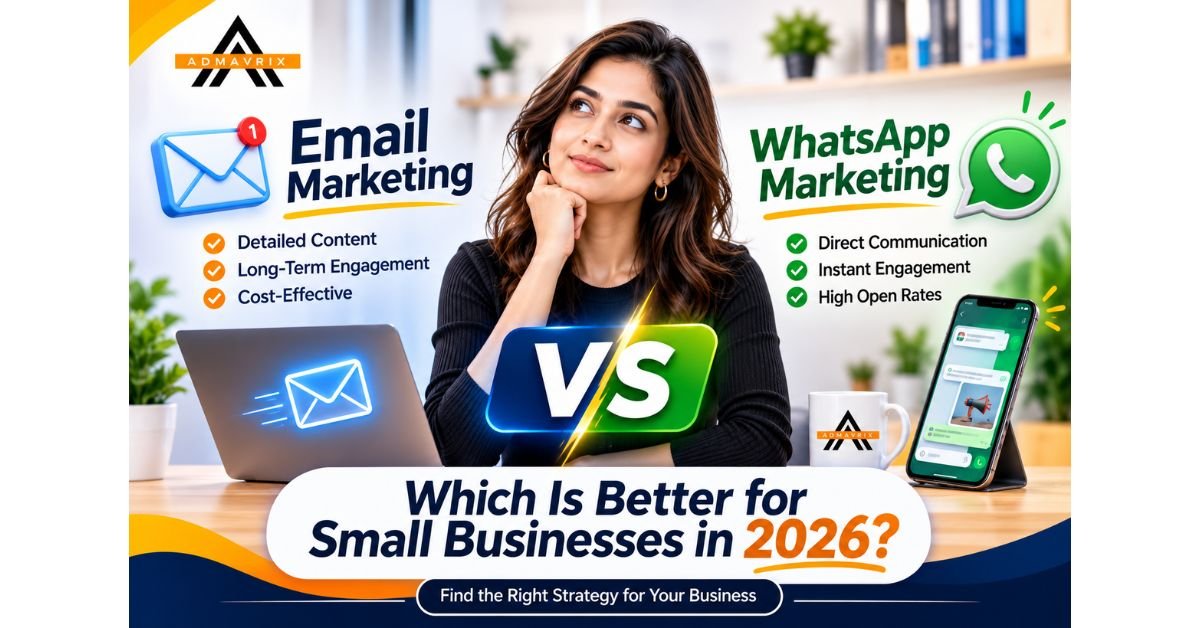
In 2026, small businesses need a smarter communication strategy. So, which is better: Email Marketing vs WhatsApp Marketing?
Let’s find out.
Introduction
Digital marketing is changing how small businesses communicate with customers. Today, businesses no longer depend only on traditional advertising to promote their products and services.
Email marketing and WhatsApp marketing have become important tools for reaching potential customers, building relationships and increasing sales.
While email marketing helps businesses share detailed information, newsletters and promotional campaigns, WhatsApp marketing offers direct and conversational communication.
However, both channels serve different purposes.
In this guide, we will compare Email Marketing vs WhatsApp Marketing, explore their benefits, understand their differences and discover which strategy works best for small businesses in 2026.
What Is Email Marketing?
Email marketing is a digital marketing strategy that involves sending promotional messages, newsletters, product updates and business information directly to customers through email.
Businesses use email campaigns to educate audiences, promote offers, share valuable content and maintain long-term customer relationships.
Common email marketing activities include:
- Sending newsletters and business updates.
- Promoting products and services.
- Sharing discounts and special offers.
- Sending welcome and follow-up emails.
- Recovering abandoned shopping carts.
- Sharing educational content.
What Is WhatsApp Marketing?
WhatsApp marketing is a communication strategy that uses WhatsApp to connect with customers, promote products and services, share updates and generate enquiries.
Businesses can use the WhatsApp Business app or eligible WhatsApp Business Platform solutions to communicate with customers.
Common WhatsApp marketing activities include:
- Sharing product and service updates.
- Sending appointment reminders.
- Answering customer questions.
- Sharing promotional messages with consent.
- Providing customer support.
- Following up on enquiries and orders.
Key Points: Email Marketing vs WhatsApp Marketing
The biggest difference is how businesses communicate with their customers.
Email is suitable for detailed communication and long-term campaigns, whereas WhatsApp is useful for direct conversations and timely updates.
Both channels can support customer engagement, lead generation and business growth when used correctly.
Visual Introduction: Email vs WhatsApp Marketing
| Comparison | Email Marketing | WhatsApp Marketing |
|---|---|---|
| Communication | Formal and detailed | Direct and conversational |
| Content | Newsletters, articles and offers | Messages, images and updates |
| Best For | Long-term campaigns | Quick communication |
| Customer Support | Email-based support | Real-time conversations |
| Personalisation | Segmented email campaigns | Personalised conversations |
| Automation | Automated email sequences | Automated messaging workflows |
| Customer Relationship | Nurturing over time | Direct interaction |
Features and Benefits of Email Marketing
1. Cost-Effective Communication
Businesses can reach large groups of subscribers through email campaigns without printing or distributing promotional materials.
2. Detailed Information Sharing
Email allows businesses to share detailed product descriptions, newsletters, guides, announcements and promotional content.
3. Audience Segmentation
Businesses can divide subscribers into different groups based on their interests, behaviour and previous interactions.
4. Marketing Automation
Automated welcome emails, follow-ups and customer journeys help businesses communicate consistently.
5. Performance Tracking
Email platforms provide useful performance metrics such as delivery rates, clicks, conversions and unsubscribes.
Features and Benefits of WhatsApp Marketing
1. Direct Customer Communication
WhatsApp allows businesses to communicate directly with customers and answer their questions through conversations.
2. Convenient Customer Support
Customers can easily contact businesses to ask about products, services, bookings and orders.
3. Personalised Engagement
Businesses can tailor messages according to customer interests and previous interactions.
4. Quick Updates
WhatsApp is useful for sharing appointment confirmations, order updates and important business announcements.
5. Multimedia Communication
Businesses can share images, videos, product catalogues and other supported media formats.
Quick Insights: Email Marketing vs WhatsApp Marketing
| Business Goal | Better-Suited Channel |
|---|---|
| Sending newsletters | |
| Sharing detailed offers | |
| Customer enquiries | |
| Appointment reminders | |
| Educational campaigns | |
| Order updates | |
| Long-term customer nurturing | |
| Personal conversations |
The best channel ultimately depends on your audience, communication goals and business requirements.
Small Business Case Study: A Realistic Example
Imagine a small digital marketing agency offering SEO, website development and social media management services.
The agency wants to attract new customers and convert website visitors into paying clients.
Instead of depending on one communication channel, it uses both email and WhatsApp marketing.
Email Marketing Strategy:
- Sends monthly digital marketing newsletters.
- Shares SEO tips and educational guides.
- Introduces new services and business updates.
WhatsApp Marketing Strategy:
- Responds to enquiries from interested customers.
- Shares service details with permission.
- Schedules consultation calls.
- Follows up with potential clients.
Result: Email supports long-term communication, while WhatsApp helps manage direct customer conversations.
This is an illustrative business example, not a verified client performance study.
Deep Explanation: Which Marketing Channel Should Small Businesses Choose?
Choosing between Email Marketing vs WhatsApp Marketing depends on what you want to achieve.
If your business regularly publishes blogs, educational content, newsletters or detailed product updates, email marketing can be a strong choice.
If your business depends on customer enquiries, bookings, consultations and personalised support, WhatsApp marketing can be particularly useful.
However, businesses should not ignore the importance of combining both channels.
For example, an online store can use email to introduce new collections and WhatsApp to answer product questions and share order updates.
Similarly, a service-based business can use email to educate potential clients and WhatsApp to arrange consultations.
The smartest strategy is to use both channels for different stages of the customer journey.
Latest Digital Marketing Trends in 2026
Several developments are shaping business communication:
- AI-Powered Personalisation: Businesses are increasingly using AI to create relevant customer communication and marketing content.
- Marketing Automation: Automated customer journeys help businesses manage repetitive communication.
- Omnichannel Marketing: Businesses are connecting email, WhatsApp, websites and social media to create consistent customer experiences.
- First-Party Data: Businesses are focusing on customer information collected directly with appropriate consent.
- Conversational Marketing: Personalised conversations are becoming an important part of customer engagement.
Common Mistakes to Avoid
- Sending promotional emails without permission.
- Sending excessive WhatsApp messages.
- Using the same message for every customer.
- Ignoring customer replies and questions.
- Not tracking campaign performance.
- Failing to include a clear call to action.
- Ignoring unsubscribe and opt-out requests.
- Depending entirely on one marketing channel.
Pro Tips for Better Marketing Results
- Build an email subscriber list through your website.
- Collect WhatsApp opt-ins before sending promotional messages.
- Segment customers according to their interests.
- Write clear and engaging subject lines.
- Keep WhatsApp messages short and useful.
- Use automation for repetitive communication.
- Track clicks, conversions and customer enquiries.
- Test different campaigns to understand what works.
Step-by-Step Guide: How to Combine Email and WhatsApp Marketing
Step 1: Identify Your Target Audience
Understand your ideal customers, their interests and the type of information they expect from your business.
Step 2: Build Your Email Subscriber List
Use website forms, enquiry forms and other permission-based methods to collect email subscribers.
Step 3: Set Up WhatsApp Business
Create a professional business profile with your business information, services and contact details.
Step 4: Create Valuable Content
Prepare useful newsletters, promotional updates, educational content and customer messages.
Step 5: Choose the Right Channel
Use email for detailed information and WhatsApp for relevant direct communication.
Step 6: Automate Your Campaigns
Use suitable marketing tools to automate welcome messages, follow-ups and customer updates.
Step 7: Monitor and Improve Performance
Track campaign engagement, clicks, conversions, enquiries and customer feedback.
Expert Insight
“Successful digital marketing is not about choosing the most popular communication channel. It is about delivering the right message to the right customer at the right time.”
— Admavrix Editorial Insight
Conclusion: Email Marketing vs WhatsApp Marketing – Which Is Better?
So, which is better in 2026: Email Marketing vs WhatsApp Marketing?
The answer depends on your business objectives.
Email marketing is excellent for newsletters, detailed information, educational campaigns and long-term customer relationships.
WhatsApp marketing is useful for direct conversations, customer support, enquiries and timely updates.
For small businesses, combining both channels can create a more effective digital marketing strategy.
Rather than choosing one over the other, understand how each platform supports your customer journey and use them strategically.
Want to Grow Your Business with Smarter Digital Marketing?
At Admavrix, we help businesses strengthen their online presence through SEO, social media marketing, website development, branding and digital advertising.
Let’s build a digital marketing strategy that attracts the right audience and turns opportunities into customers.
Visit: https://www.admavrix.com
DM us to discuss your digital marketing goals.
Frequently Asked Questions (FAQs)
1. Which is better, email marketing or WhatsApp marketing?
Both are useful marketing channels. Email marketing is better suited to detailed campaigns and newsletters, while WhatsApp marketing is useful for direct communication and customer support.
2. Is WhatsApp marketing effective for small businesses?
Yes. WhatsApp can help small businesses communicate with customers, answer enquiries, share updates and manage customer relationships, provided messages follow applicable consent requirements.
3. Is email marketing still effective in 2026?
Yes. Email marketing remains useful for newsletters, promotional campaigns, customer education and long-term communication.
4. Can businesses use email and WhatsApp marketing together?
Yes. Businesses can use email for detailed communication and WhatsApp for direct conversations, creating a coordinated marketing strategy.
5. Is WhatsApp marketing free for businesses?
The WhatsApp Business app offers free core features, while certain advanced platform services and business messaging may involve charges depending on usage and applicable pricing.
6. How can small businesses increase email marketing results?
Businesses can improve results by building permission-based subscriber lists, segmenting audiences, creating useful content and testing subject lines and calls to action.
7. Do businesses need customer permission for WhatsApp marketing?
Yes. Businesses should obtain appropriate opt-in permission before sending marketing messages and respect customer opt-out requests.
Future Outlook: Email and WhatsApp Marketing Beyond 2026
The future of digital marketing will increasingly focus on personalised communication, automation and better customer experiences.
AI-powered tools will help businesses create relevant campaigns, understand customer behaviour and improve marketing efficiency.
Email will continue to play an important role in detailed communication, while WhatsApp will remain valuable for conversational customer engagement.
Small businesses that combine these channels with a clear strategy, relevant content and customer consent will be better positioned to build lasting relationships and grow online.